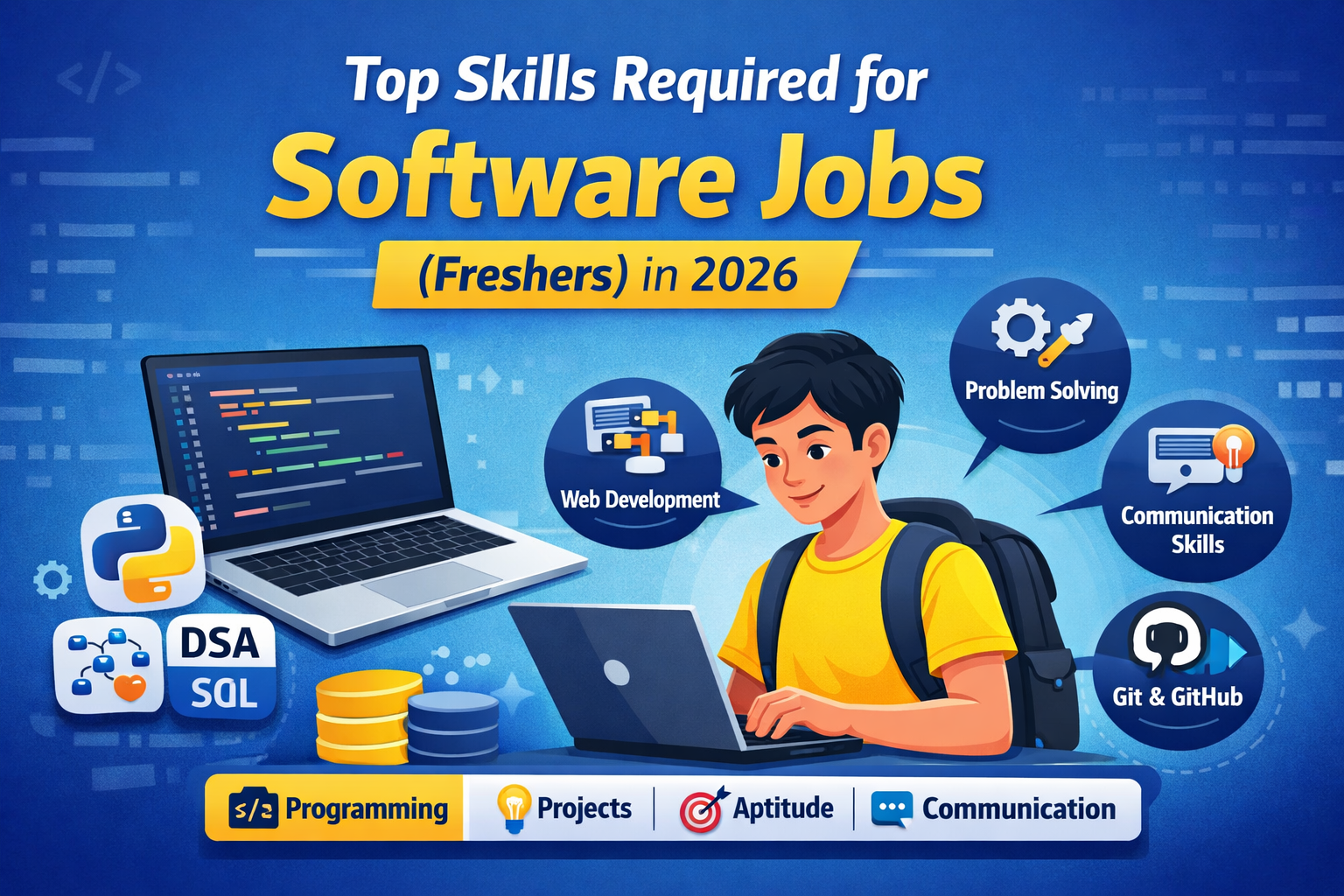
Many freshers skip job openings the moment they see an experience requirement such as “0–2 years”, “0–1 year”, or “up to 2 years”. Others do the opposite and apply to every role that mentions zero somewhere in the range.
The correct answer is more nuanced: 0–2 years can include freshers, but it does not automatically mean every fresher is eligible. Experience is only one part of a job description. Skills, education, location, shift requirements, domain knowledge, work authorization, and other criteria can still matter.
What does “0–2 years experience” actually mean?
When an employer writes “0–2 years,” the range normally means the role is designed for candidates whose relevant professional experience falls between zero and two years. Zero is part of that range, so a candidate without full-time industry experience is not excluded by the experience number alone.
However, that does not mean the employer is promising to consider every graduate. A posting may simultaneously require a particular technology, degree, certification, language, location, shift, or domain background.
Can a fresher apply for a 0–2 years job?
Usually, yes—if the rest of the eligibility criteria fit your profile.
For example, suppose a role says:
- Experience: 0–2 years
- Required skill: Java
- Education: Bachelor’s degree
- Location: Bengaluru
A recent graduate with Java projects and the required degree can reasonably consider applying even without a previous full-time job.
Now consider a different role:
- Experience: 0–2 years
- Required skill: AVEVA OSIsoft PI
- Education: 15 years full-time education
A fresher is technically inside the experience range, but the specific skill requirement still matters. The phrase “0–2 years” does not make the must-have technology optional.
Why companies use ranges instead of writing “freshers only”
Companies often want flexibility. A hiring manager may be open to a strong graduate, someone with a six-month internship, or a candidate who has already worked for one or two years. Using a range allows recruiters to evaluate several early-career profiles for the same position.
It also reflects the reality that two candidates with the same number of years can have very different capabilities. One graduate may have strong internships and projects, while another candidate with one year of experience may have worked in an unrelated technology.
Does internship experience count?
It can help, but employers do not all count internships the same way. Some application forms ask specifically for full-time professional experience and may not treat internships as equivalent. Other recruiters value internships heavily when assessing an entry-level candidate.
Do not change or inflate the number of years on your resume to make an internship look like permanent employment. Instead, list the internship clearly and explain the work you actually completed.
Do college projects count as work experience?
Projects normally do not become “professional experience” simply because they took several months to complete. They are still extremely useful evidence of skill.
For a fresher applying to a 0–2 year software role, a good project can demonstrate that you understand coding, databases, APIs, Git, testing, deployment, debugging, teamwork, or the specific technology named in the job description.
Use projects to prove competence, not to manufacture years of employment.
What if the posting says “1–2 years” instead?
This is different. If the minimum is clearly one year, a candidate with zero relevant professional experience does not meet the stated experience requirement.
You can still make a personal decision to apply when you are very close to the requirement—especially if you have unusually relevant internships or hands-on experience—but you should understand that you are applying despite a stated minimum, not because the listing formally includes freshers.
What about “0–1 years” or “0–3 years”?
The same logic applies. If zero is explicitly included, lack of full-time experience is not automatically disqualifying. You still need to evaluate the rest of the posting.
A wider range such as 0–3 years can mean the company is open to different seniority levels within an early-career band. It does not mean a fresher will necessarily compete equally for every version of the role.
How to read an experience requirement correctly
Do not evaluate the experience line in isolation. Read these areas together:
- Experience range: Does it include zero?
- Must-have skills: Do you actually have them?
- Education: Does your degree or education pattern match?
- Location: Can you work where required?
- Work model: Is it onsite, hybrid, or remote?
- Shift: Are night or rotational shifts mentioned?
- Domain knowledge: Is prior knowledge of banking, healthcare, manufacturing, or another industry expected?
- Employment type: Permanent, contract, apprenticeship, internship, or trainee?
Example: a 0–2 year software role
Imagine an employer wants a software engineer with 0–2 years of experience and asks for Python, SQL, Git, and basic API knowledge.
A fresher with a Python project, SQL practice, a GitHub profile, and an internship could be a reasonable applicant. Your resume should make those relevant skills easy to see.
The mistake would be applying with a generic resume that contains none of the technologies mentioned in the role and assuming the word “0” alone makes you qualified.
Example: a 0–2 year non-tech role
Suppose a process role lists 0–2 years, Excel, strong communication, night-shift availability, and knowledge of mortgage operations.
A fresher may fit the experience requirement but should still consider whether the shift, voice work, process environment, and domain expectations match what they want.
This is why Hiring365 job posts include a “Who should apply?” and, where useful, a “Who may not be a good fit?” section instead of focusing only on eligibility.
Should you apply if your graduation batch is not mentioned?
If an official job listing does not specify a graduation batch, do not assume there is a hidden batch rule simply because another website added one.
Check the employer’s application form. Sometimes additional questions appear only after you start the application. If neither the listing nor the form sets a batch restriction, evaluate yourself using the requirements that are actually published.
Should you apply if salary is not mentioned?
Yes, if the role otherwise interests you. Many employers do not publish compensation in the job advertisement.
Do not rely on random salary numbers copied across job websites as though they were official. Salary databases and employee reports can provide context, but an estimate should be clearly labelled as an estimate rather than presented as the employer’s offer.
How should a fresher tailor the resume?
For a 0–2 year role, the recruiter needs quick evidence that your profile is relevant even without long professional experience.
- Put the most relevant technical skills near the top.
- Describe projects using outcomes and technologies, not just project titles.
- Include internships honestly and clearly.
- Add certifications only when they support the role.
- Use keywords naturally when they match your actual skills.
- Remove unrelated information that pushes relevant work down the page.
What not to do
- Do not claim fake years of experience.
- Do not convert every college project into “work experience.”
- Do not assume “0–2 years” overrides a mandatory skill.
- Do not invent a degree, CGPA, or batch requirement that the employer never stated.
- Do not pay anyone who promises guaranteed selection.
- Do not apply through suspicious forms when an official careers page is available.
A simple decision rule
If the role says 0–2 years, ask three questions:
- Am I inside the stated experience range?
- Do I meet the important must-have requirements?
- Would I realistically accept the location, shift, work model, and type of work?
If the answer is yes to all three, applying is usually reasonable.
What if you meet only 70–80% of the requirements?
Not every bullet carries the same weight. Pay special attention to language such as must have, required, minimum, and mandatory. Those conditions usually matter more than “preferred,” “good to have,” or “nice to have.”
If you meet the core requirements but lack one optional tool, you may still be a sensible candidate. If you lack the main technology the employer explicitly calls mandatory, the mismatch is more significant.
How Hiring365 handles 0–2 year jobs
When an official employer listing says 0–2 years, Hiring365 may categorize the opportunity under Freshers Jobs because zero experience is explicitly included. But we also examine the rest of the listing and highlight important skill, education, shift, contract, and location requirements.
We do not want “fresher eligible” to become clickbait. The objective is to help you decide whether the opportunity actually fits your profile.
Final answer
Yes, freshers can apply for many jobs that say 0–2 years of experience. Zero is part of the employer’s stated range. But experience is only one eligibility factor, so always read the complete official listing before applying.
A better question than “Can freshers apply?” is: “Does my overall profile match what this employer is actually asking for?”
That approach saves time, improves application quality, and helps you avoid both unnecessary self-rejection and random applications.