IBM fresher hiring can vary by role, location, business unit and hiring cycle. Instead of treating one old assessment pattern or salary figure as permanent, candidates should use the current IBM job description and official communication as the source of truth.
How to Use This Guide
This guide is for preparation. It does not claim that every IBM fresher role uses the same eligibility rules, salary, assessment platform or interview sequence.
1. Start With the Exact IBM Role
IBM hires early-career candidates into different technical and business roles. Before preparing, note the exact job title, location, required skills, experience range and qualification shown on the official IBM Careers page.
Do not assume that an eligibility rule from an older campus drive automatically applies to a new off-campus opening.
2. Review the Required Skills
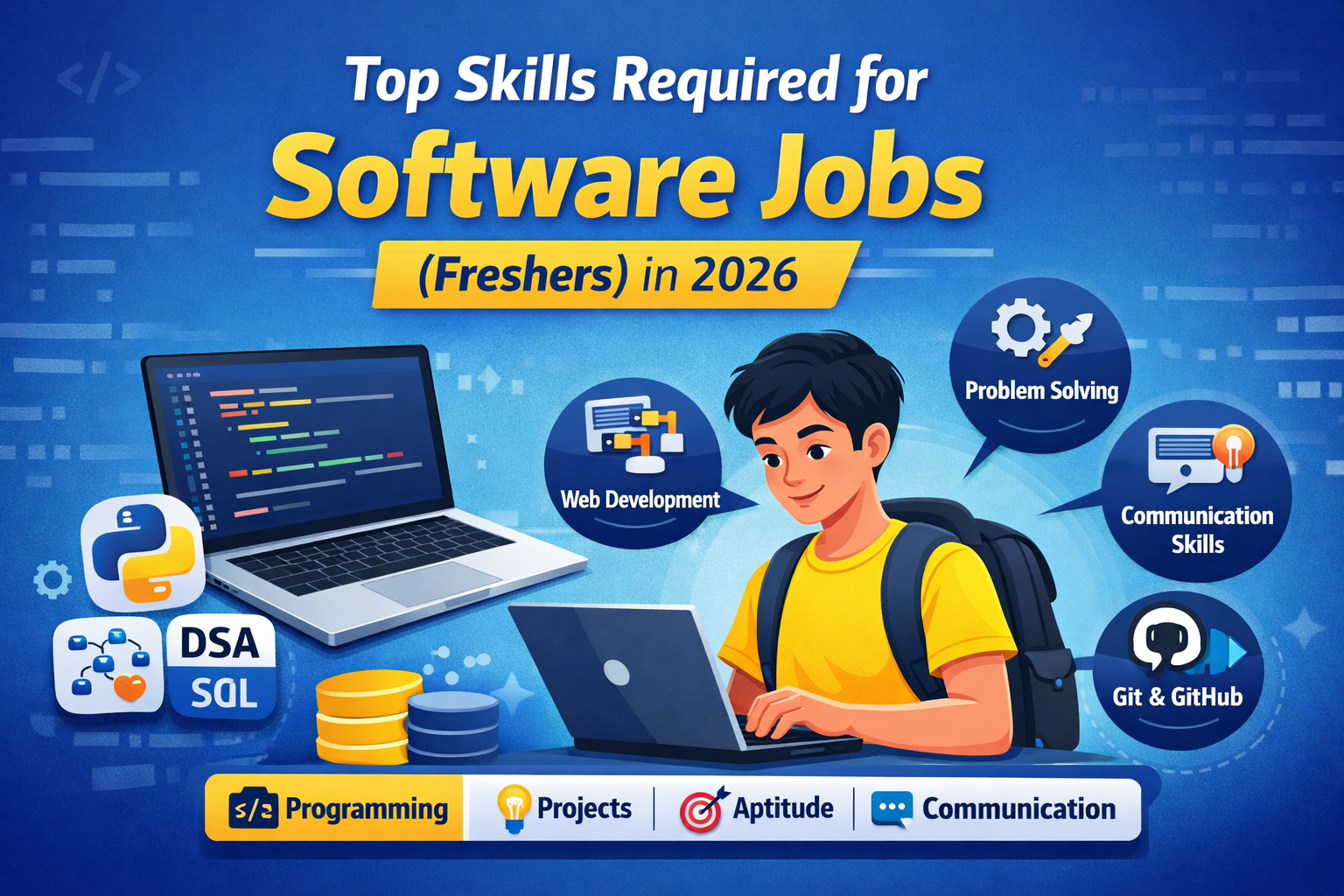
Build your preparation around the actual role. For software-oriented roles, common areas worth revising include programming fundamentals, object-oriented programming, data structures, SQL, DBMS, operating systems and basic software-development practices.
If the job description names a specific technology such as Java, Python, cloud tools or automation frameworks, give that skill higher priority.
3. Prepare for Coding and Problem Solving
Practise writing readable solutions for arrays, strings, searching, sorting, hash maps, loops, functions and basic data structures. Focus on understanding time complexity and testing edge cases rather than memorising solutions.
Use the programming language you can explain confidently. If an assessment specifies allowed languages or a particular platform, follow the current instructions sent by IBM.
4. Revise Core Computer Science Fundamentals
- OOP: abstraction, encapsulation, inheritance and polymorphism;
- DBMS: keys, normalization, joins and transactions;
- SQL: filtering, grouping, joins, aggregate functions and subqueries;
- OS: processes, threads, memory and basic scheduling concepts;
- Networks: HTTP, TCP/IP and basic client-server concepts where relevant.
5. Prepare Your Projects Properly
Be ready to explain one or two strong projects in depth. Cover the problem, your contribution, technology stack, architecture, database choice, one technical challenge and what you would improve next.
For team projects, clearly separate your own work from the rest of the team’s contribution.
6. Communication and Behavioural Preparation
Prepare concise answers for teamwork, problem solving, learning new technology, handling feedback, deadlines and project challenges. Use real examples rather than memorised scripts.
7. Do Not Treat Old Eligibility Rules as Permanent
Degree, branch, CGPA, backlog, graduation year and education-gap rules can differ by IBM opening. If the current official listing does not state one of these requirements, do not add it from an old third-party article.
8. Do Not Treat Third-Party Salary Figures as Guaranteed
Compensation can vary by role, location and hiring program. If an official job listing does not publish salary, treat it as not specified rather than presenting an estimate as a confirmed offer.
9. A Practical 7-Day IBM Preparation Plan
Day 1: Read the current job description and identify required skills.
Day 2: Revise OOP, DBMS and SQL.
Day 3: Practise arrays, strings and basic coding problems.
Day 4: Revise OS, networking basics and role-specific technologies.
Day 5: Prepare your projects and resume-based questions.
Day 6: Practise behavioural and communication questions.
Day 7: Take a mock assessment/interview and review mistakes.
Related Hiring365 Guides
- GitHub Profile Tips for Developers
- Best Resume Format for Freshers
- How to Read a Job Description Before Applying
Official IBM career resources: Check IBM Careers for current vacancies, and visit its Entry Level section for graduate and internship opportunities. This guide is for preparation and does not represent an active vacancy.
Important: Always follow the latest IBM Careers listing and official recruitment communication for your specific application.