Cognizant GenC hiring can vary by campus, role, location and hiring cycle. Candidates should treat any fixed assessment pattern, package or eligibility rule found on third-party websites as historical guidance unless it is confirmed in the current official communication.
What This Guide Is For
This guide focuses on the areas freshers commonly need to prepare for when applying to Cognizant entry-level technology roles. It does not claim that every candidate will receive the same assessment, interview questions or selection sequence.
1. Read the Current Official Communication First
Before preparing, check the job description, campus notice, Superset invitation or official Cognizant careers communication you received. Note the role name, eligibility criteria, location, assessment instructions and required documents. If a percentage, batch, branch or backlog rule is not mentioned in your current official communication, do not assume an old rule still applies.
2. Communication Preparation
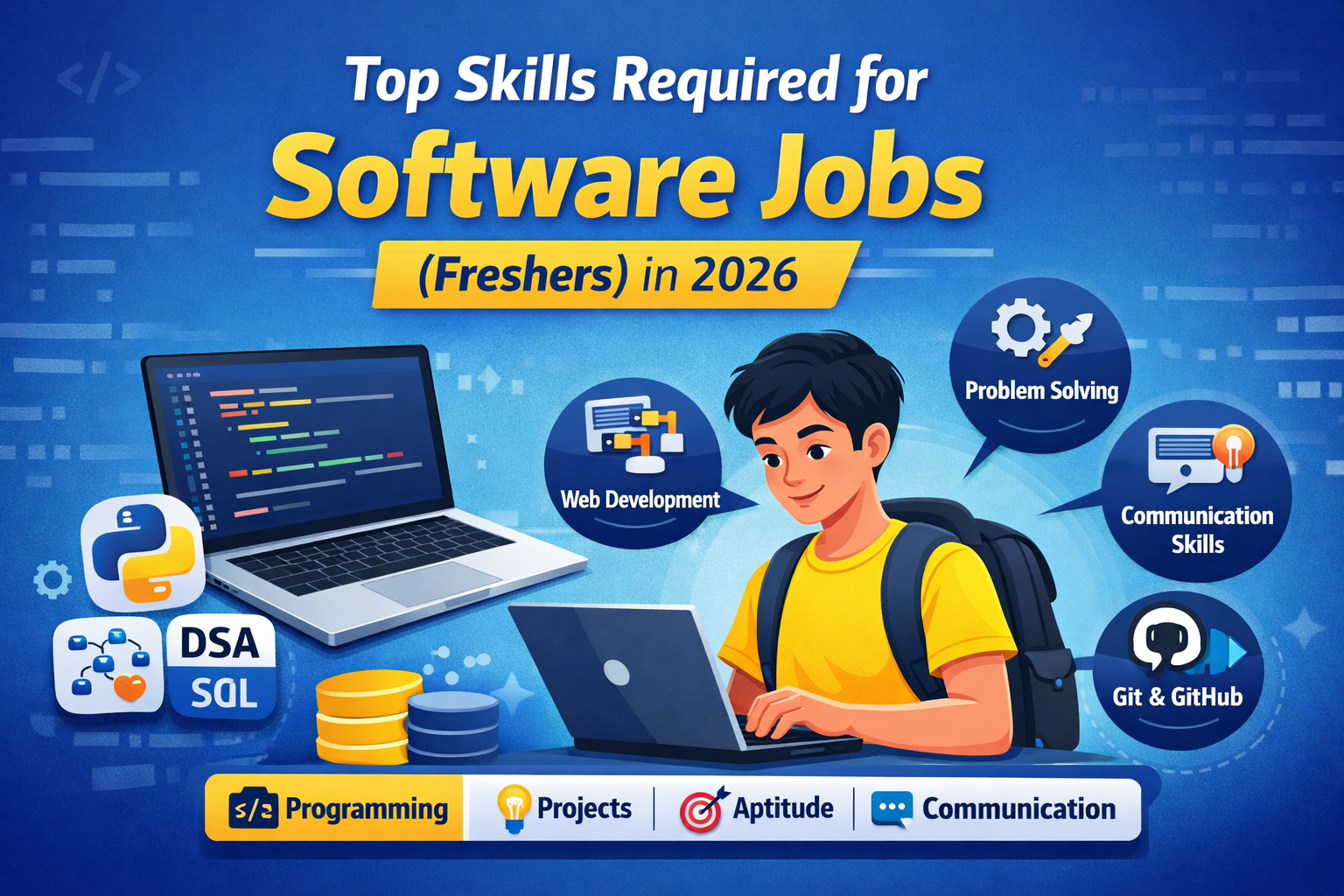
Some fresher hiring processes may include a communication or spoken-English assessment. Useful preparation includes reading short passages clearly, listening carefully before responding, practising concise spoken answers and improving pronunciation and pace.
3. Aptitude Preparation
If your process includes aptitude, revise the fundamentals rather than chasing exact question predictions. Common placement topics include percentages, ratios, averages, profit and loss, time and work, number systems, logical reasoning, seating arrangements and reading comprehension.
Use timed practice to improve accuracy. Do not rely on unofficial claims about exact cut-offs unless Cognizant or the assessment provider publishes them for your drive.
4. Technical Fundamentals
For technology-oriented fresher roles, candidates should be comfortable with the subjects listed on their resume and in the job description. Typical preparation areas include object-oriented programming, basic data structures and algorithms, DBMS and SQL, operating-system fundamentals, computer networks at a basic level, and one programming language you can code confidently in.
5. Project Preparation
Your project is often one of the easiest ways for an interviewer to understand your practical skills. Prepare a two-minute explanation covering the problem, your role, technology stack, architecture, one challenge and the final result.
If it was a team project, clearly distinguish your contribution from the work done by other members.
6. Coding Preparation
Practise small problems involving arrays, strings, loops, conditions, functions and basic data structures. The important part is being able to explain your logic, test edge cases and write readable code.
7. SQL Preparation
Freshers should be comfortable with SELECT queries, WHERE, GROUP BY, HAVING, joins, aggregate functions and basic subqueries. If SQL is listed on your resume, expect to explain or write simple queries.
8. HR and Behavioural Questions
- Tell me about yourself.
- Why are you interested in this role?
- Explain a challenge from a project.
- How do you work in a team?
- Are you open to relocation or shifts if the role requires them?
- What are you currently learning?
9. What Not to Do
- Do not invent a package, cut-off or eligibility rule from an old drive.
- Do not claim a skill on your resume that you cannot explain.
- Do not memorise answers word-for-word.
- Do not present college projects as professional work experience.
- Do not pay anyone for guaranteed selection or an offer letter.
A 7-Day Preparation Plan
Day 1: Review the job description and your resume.
Day 2: Revise aptitude fundamentals and practise timed questions.
Day 3: Revise OOP, DBMS and SQL.
Day 4: Practise arrays, strings and simple coding problems.
Day 5: Prepare your project explanation and technical follow-up questions.
Day 6: Practise communication and behavioural answers.
Day 7: Take a mock assessment or interview and review weak areas.
Related Hiring365 Guides
- Best Resume Format for Freshers
- How to Read a Job Description Before Applying
- How to Verify a Job Opening Is Genuine
Important: Hiring processes change. Use this as preparation guidance and follow the current official Cognizant instructions for your specific application.